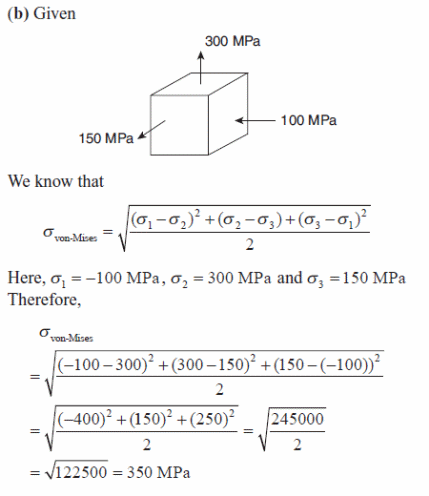
Q1. The pressure P of a gas in terms of its mean kinetic energy per unit volume E is equal to
(a) E/3
(b) E/2
(c) 3E/4
(d) 2E/3
Ans. d
Sol.
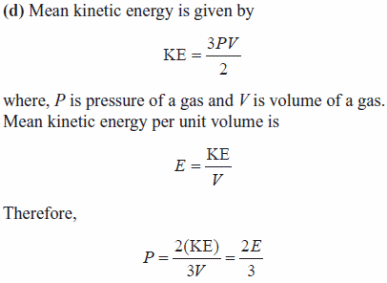
Q2. Work done in a free expansion process is
(a) +ve
(b) –ve
(c) zero
(d) none of the above
Ans. c
Sol.
(c) The work done in a free expansion process is zero because free expansion is an irreversible adiabatic and isentropic process. In free expansion, there is no external resistance upon which system can apply force or torque.
Q3. 
(a) volume
(b) pressure
(c) temperature
(d) entropy
Ans. a
Sol.
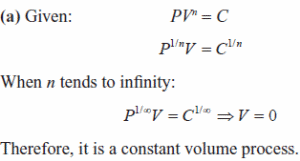
Q4. During the charging of a storage battery, the current I is 20 A and the voltage E in 12.8 V. The rate of heat transfer from the battery is 16 W. At what rate is the internal energy increasing?
(a) 
(b) 
(c) 0
(d) 
Ans. d
Sol.
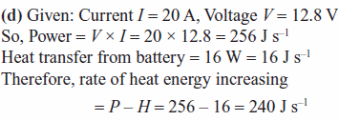
Q5. The compression ratio for diesel engines is close to
(a) 3 to 6
(b) 5 to 8
(c) 15 to 20
(d) 20 to 30
Ans. c
Sol.
(c) The compression rate of diesel engines is close to 15 – 20.
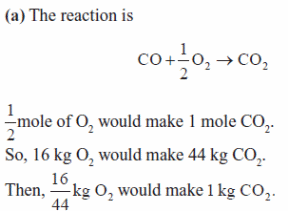
Q6. One kg of carbon monoxide requires how much quantity of oxygen to produce 11/7 kg of carbondioxide gas?
(a) 4/7 kg
(b) 11/4 kg
(c) 9/7 kg
(d) none of the above
Ans. a
Sol.

Q7. The entropy of water at 0 K is assumed to be
(a) 
(b) 
(c) 
(d) 0
Ans. d
Sol.
(d) The entropy of water at 0 K is assumed to be zero
Q8. An expression process as per law PV = constant is known as
(a) parabolic expansion
(b) hyperbolic expansion
(c) isentropic expansion
(d) free expansion
Ans. b
Sol.
(b) An expansion process as per law PV = Constant is known as hyperbolic expansion.
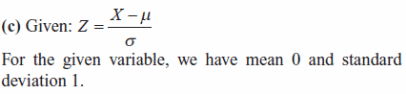
Q9. Speed of an aeroplane is measured by
(a) pitot tube
(b) hot wire anemometer
(c) venturimeter
(d) rotameter
Ans. a
Sol.
(a) Speed of an aeroplane is measured by pitot tube
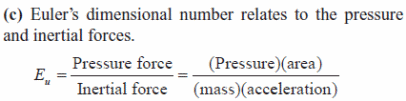
Q10. Euler’s dimensionless number relates the following
(a) inertial force and gravity
(b) viscous force and inertial force
(c) pressure force and inertial force
(d) viscous force and pressure force
Ans. c
Sol.
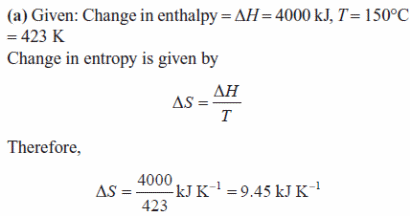
Q11. A simple compressible substance inside a cylinder undergoes a change of state quanti-statistically, isothermally and at constant pressure of 1.5 MPa. If the enthalpy change for the system is 4000 kJ at 150°C, what is the corresponding change in its entropy?
(a) 
(b) 
(c) 
(d) 0
Ans. a
Sol.
Q12. 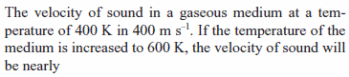
(a) 
(b) 
(c) 
(d) none of there
Ans. b
Sol.
Q13. Stress strain relation of the Newtonian fluid is
(a) parabolic
(b) linear
(c) hyperbolic
(d) inverse type
Ans. b
Sol.
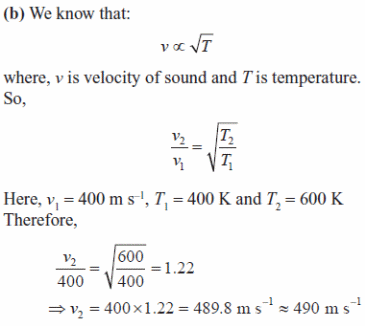
(b) Stress strain relation of the Newtonian fluid is linear. Stress ∝ Strain
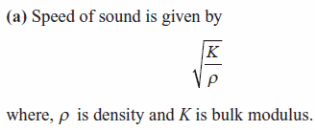
Q14. . Speed of sound in water is equal to (K-built modulus, ρ-density)
(a) 
(b) 
(c) 
(d) 
Ans. a
Sol.
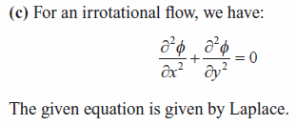
Q15. 
(a) Cauchy-Riemann
(b) Reynolds
(c) Laplace
(d) Bernoulli
Ans. c
Sol.
Q16. In a centrifugal pump casing, the flow of water leaving the impeller is
(a) rectilinear flow
(b) free vortex motion
(c) radial flow
(d) forced vortex
Ans. b
Sol.
(b) In a centrifugal pump casing, the flow of water leaving the impeller is free vortex motion. As fluid particles move in circles about a point. The only non-trivial velocity component is tangential. This tangential speed varies with radius so that same circulation is maintained.
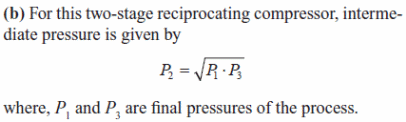
Q17. For a two stage reciprocating compressor, compression from P1 to P3 is with perfect intercooling and no pressure losses. If compression in both the cylinders follows the same polytropic process and the atmospheric pressure is Pa, then the intermediate pressure P2 is given by
(a) 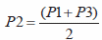
(b) 
(c) 
(d) 
Ans. b
Sol.
Q18. The degree of reaction in an axial flow compressor is defined as the ratio of static enthalpy rise in the
(a) rotor to static enthalpy rise in the stator
(b) stator to static enthalpy rise in the rotor
(c) rotor to static enthalpy rise in the stage
(d) stator to static enthalpy rise in the stage
Ans. c
Sol.
(c) The degree of reaction in an axial flow compressor is defined as the ratio of static enthalpy rise in the rotor to the static enthalpy rise in the stage.
Q19. The frequency of ultrasonic waves is
(a) less than 20 Hz
(b) between 20 to 10000 Hz
(c) between 20 to 20000 Hz
(d) above 20000 Hz
Ans. d
Sol.
(d) The frequency of ultrasonic waves is above 20,000 Hz
Q20. Loudness of the sound does not change with the change in
(a) frequency
(b) amplitude
(c) distance from the source of sound
(d) none of these
Ans. a
Sol.
(a) Loudness of sound does not change with the change in frequency.
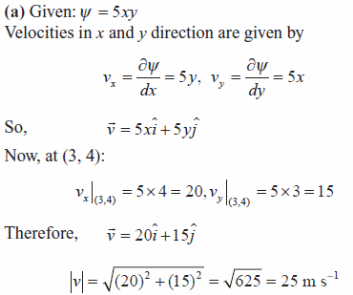
Q21. If the stream function of a two dimensional flow is ψ = 5xy, then the velocity at a point (3, 6) is
(a) 
(b) 
(c) 
(d) 
Ans. a
Sol.
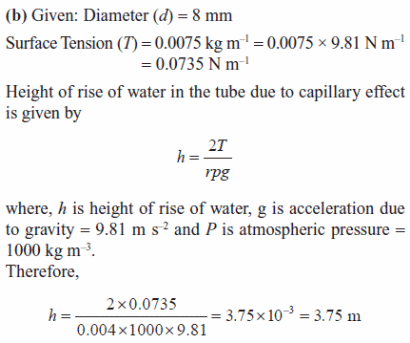
Q22. 
(a) 7.5 mm
(b) 3.75 mm
(c) 11.25 mm
(d) none of these
Ans. b
Sol.
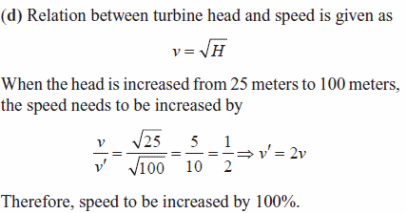
Q23. An impulse turbine produces 125 hp under a head of 25 meters. By what percentage should the speed be increased for a head of 100 metres
(a) 25%
(b) 50%
(c) 75%
(d) 100%
Ans. d
Sol.
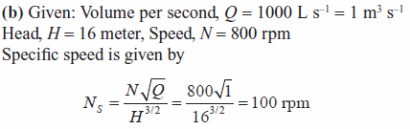
Q24. The specific speed of a centrifugal pump, delivering 1000 litres of water per second against a head of 16 metre at 800 rpm
(a) 50 rpm
(b) 100 rpm
(c) 150 rpm
(d) 200 rpm
Ans. b
Sol.
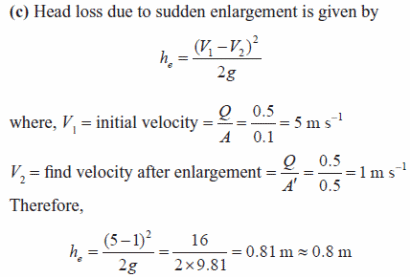
Q25. 
(a) 0.025 m
(b) 0.05 m
(c) 0.8 m
(d) 1.2 m
Ans. c
Sol.
Q26. Efficiency of a centrifugal pump is maximum when the blades are
(a) straight
(b) forward curved
(c) backward curved
(d) forward and backward curved
Ans. c
Sol.
(c) The efficiency of a centrifugal pump is maximum when the blades are curved backwards.
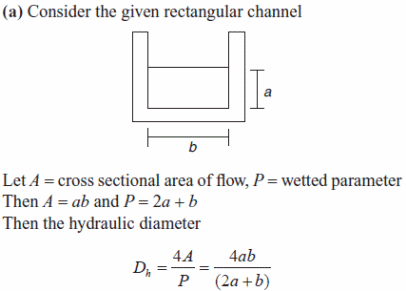
Q27. 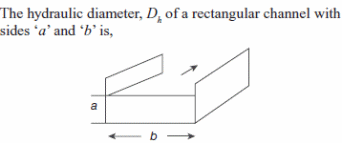
(a) 
(b) 
(c) 
(d) 
Ans. a
Sol.
Q28. Which of the following has maximum value of thermal conductivity?
(a) steel
(b) copper
(c) brass
(d) aluminium
Ans. b
Sol.
(b) Copper has the maximum value of thermal conductivit
Q29. 
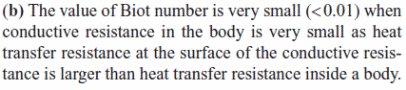
(a) conductive resistance of the fluid is negligible
(b) conductive resistance within the body is negligible
(c) convective resistance of a fluid surface of the body is negligible
(d) none of these
Ans. b
Sol.
Q30. A steam pipe is to be insulated by 2 insulating materials put over each other. For best results
(a) better insulation should be put over pipe and inferior one over it
(b) inferior insulation should be put over pipe and better one over it
(c) both may put in any order
(d) unpredictable
Ans. a
Sol.
(a) A steam pipe is to be insulated by two insulating materials put over each other. For best results, better insulation should be put over pipe and inferior one over it.
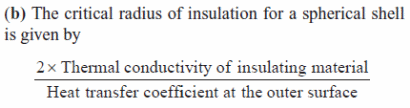
Q31. The critical radius of insulation for a spherical shell is
(a) 
(b) 
(c) 
(d) 
Ans. b
Sol.
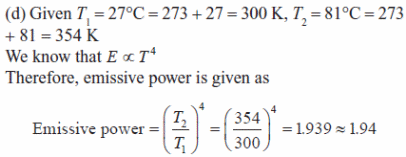
Q32. If the temperature of a solid surface changes from 27°C to 81°C, then its emissive power changes in the ratio of nearly
(a) 81
(b) 9
(c) 1.49
(d) 1.94
Ans. d
Sol.
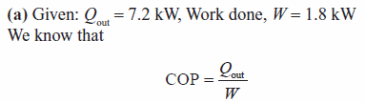
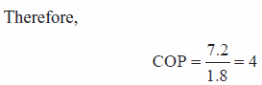
Q33. The heat removal rate from a refrigerated space is 7.2 kW and the power input to the compressor is 1.8 kW. The coefficient of performance (COP) of the refrigerator is
(a) 4
(b) 5
(c) 1.25
(d) 0.25
Ans. a
Sol.
Q34. 
(a) 
(b) 
(c) 
(d) 
Ans. c
Sol.

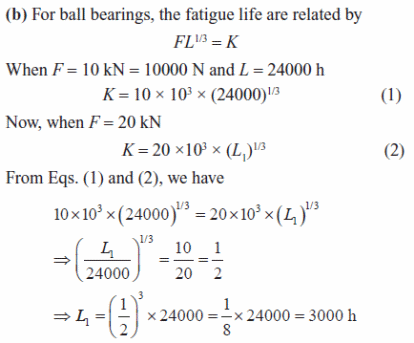
Q35. Life of a ball bearing at a load of 10 kN is 24000 hours. If the load is increased to 20 kN (all other conditions are same), its life in hour is
(a) 1000 h
(b) 3000 h
(c) 6000 h
(d) 12000 h
Ans. b
Sol.
Q36. The main objective of ‘shot peening’ is to improve which property of metal parts
(a) fatigue strength
(b) ductility
(c) surface finish
(d) none of these
Ans. a
Sol.
(a) Shot peening is a cold work process used to finish metal parts to prevent failure by improving fatigue strength.
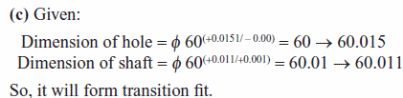
Q37. 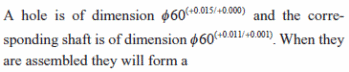
(a) interference fit
(b) clearance fit
(c) transition fit
(d) none of these
Ans. c
Sol.
Q38. Which of the following carbon steels is most weldable
(a) 1.0% carbon steel
(b) 0.3% carbon steel
(c) 0.5% carbon steel
(d) 0.15% carbon steel
Ans. d
Sol.
(d) Low carbon steels such as ductile steel and mild steel are classed as weldable, because they can be welded with low preheat and no post-treatment is required. Therefore, 0.15% carbon steel is most weldable.
Q39. A small percentage of boron is added to steel in order to
(a) increase endurance strength
(b) reduce machinability
(c) increase wear resistance
(d) increase wear resistance increase hardenability
Ans. d
Sol.
(d) Boron gives hardness to steel. So, a small percentage of boron is added to steel in order to increase hardenability.
Q40. A material that exhibits the same elastic properties in all directions at a point is called
(a) homogenous
(b) heterogenous
(c) isotropic
(d) orthotropic
Ans. c
Sol.
(c) A material that exhibits the same elastic properties in all directions at a point is called isotropic.
Q41. Number of atoms per unit cell of a face centered cubic (FCC) lattice is
(a) 14
(b) 7
(c) 4
(d) 10
Ans. c
Sol.
(c) A face centered cubic (FCC) structure contains four atoms per unit cell.
Q42. The impact strength of a material is an index of its
(a) fatigue strength
(b) tensile strength
(c) hardness
(d) toughness
Ans. d
Sol.
(d) The impact strength of a material is an index of its toughness.
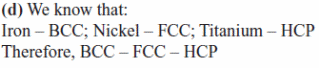
Q43. Which of the following order of crystal structure will match with metals Iron – Nickel – Titanium in that order at room temperature?
(a) BCC – HCP – FCC
(b) FCC – BCC – BCP
(c) HCP – FCC – BCC
(d) BCC – FCC – HCP
Ans. d
Sol.
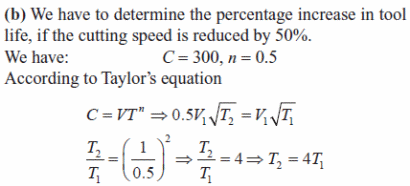
Q44. In a machining operation cutting speed is reduced by 50%. Assuming n = 0.5, C = 300 in Taylor’s equation the increase in tool life is
(a) 2
(b) 4
(c) 8
(d) 16
Ans. b
Sol.
Q45. In a linear arc welding process, the heat input per unit length is inversely proportional to
(a) welding current
(b) welding speed
(c) welding voltage
(d) duty cycle of power source
Ans. b
Sol.
(b) In a linear arc welding process, the heat input per unit length is inversely proportional to welding speed.
Q46. The welding process which uses a blanket of fusible granular flux is
(a) submerged arc welding
(b) tungsten inert gas welding
(c) electroslag welding
(d) thermit welding
Ans. a
Sol.
(a) The welding process which uses a blanket of fusible granular flux is submerged arc welding
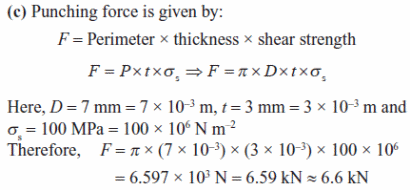
Q47. In a metal sheet of 3 mm thickness, a hole of 7 mm diameter needs to be punched. The yield strength in tension of the sheet material is 120 MPa and its ultimate shear strength is 100 MPa. The force required to punch the hole is
(a) 7.92 kN
(b) 11.6 kN
(c) 6.6 kN
(d) 13.9 kN
Ans. c
Sol.
Q48. Profile of a gear tooth can be checked by
(a) sine bar
(b) bench micrometer
(c) optical pyrometer
(d) optical projector
Ans. d
Sol.
(d) Profile of a gear tooth can be checked by optical projector.
Q49. The reflector combined with auto collimator can be used for checking
(a) parallelism
(b) circularity
(c) surface finish
(d) alignment
Ans. d
Sol.
(d) The reflector combined with auto collimator can be used for checking alignment.
Q50. PERT has following time estimate
(a) one time estimate
(b) two time estimate
(c) three time estimate
(d) nil time estimate
Ans. c
Sol.
(c) PERT analysis has three time estimates: Optimistic time estimate, Pessimistic time estimate and Most likely time estimate.
Q51. Which of the following is an amorphous material
(a) mica
(b) lead
(c) rubber
(d) glass
Ans. d
Sol.
(d) Glass is an amorphous material
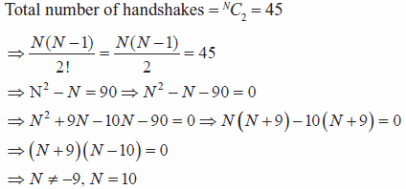
Q52. In a party, each person shook hands with every other person present. The total number of hand shakes was 45. The number of people in the party are
(a) 12
(b) 10
(c) 8
(d) 6
Ans. b
Sol.
(b) Let the total number of people = N
Q53. Two non-zero vectors are parallel if their vector product is
(a) 1
(b) 0
(c) −1
(d) 
Ans. b
Sol.
(b) The cross product of two parallel vectors is 0
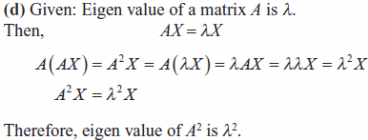
Q54. 
(a) 1
(b) 1/λ
(c) 
(d) 
Ans. d
Sol.
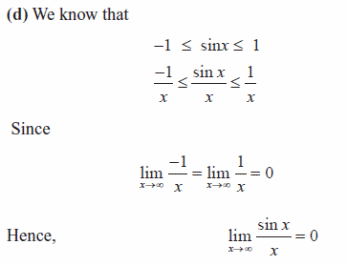
Q55. 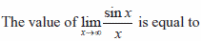
(a) 1
(b) −1
(c) infinity
(d) zero
Ans. d
Sol.
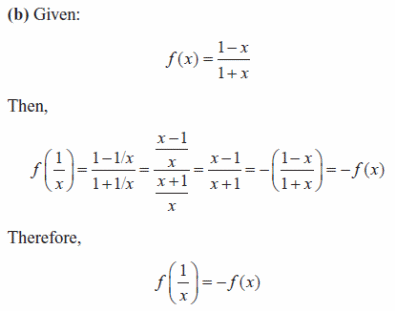
Q56. 
(a) f(x)
(b) –f(x)
(c) f(−x)
(d) ± f(x)
Ans. b
Sol.
Q57. 
(a) 
(b) 
(c) 
(d) 
Ans. a
Sol.
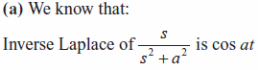
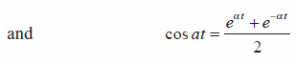
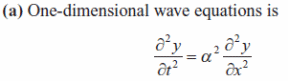
Q58. One dimensional wave equation is
(a) 
(b) 
(c) 
(d) none of these
Ans. a
Sol.
Q59. Which of the following method is said to be a direct method in numerical methods
(a) Regula–Falsi method
(b) Gauss–Siedel method
(c) Newton–Raphson method
(d) Newton–Raphson method
Ans. d
Sol.
(d) Gauss elimination method is called direct method in numerical methods. It reduces any linear system into a triangular system.
Q60. 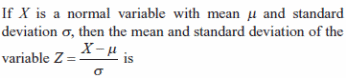
(a) 1 and 0 respectively
(b) μ and σ respectively
(c) 0 and 1 respectively
(d) none of these
Ans. c
Sol.
Q61. Example for an elliptic partial differential equation is
(a) 
(b) 
(c) 
(d) 
Ans. a
Sol.

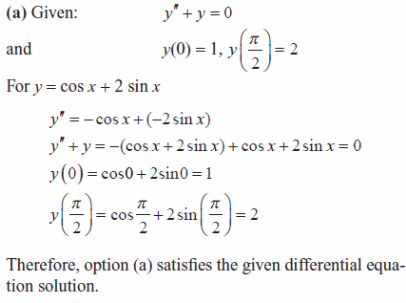
Q62. 
(a) cos x + 2 sin x
(b) cos x + sin x
(c) 2 cos x + sin x
(d) 2(cos x + 2 sin x)
Ans. a
Sol.
Q63. 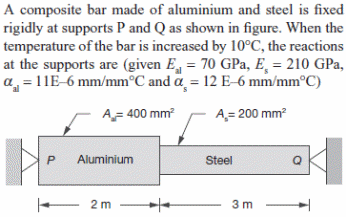
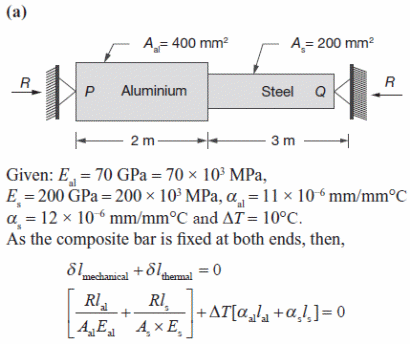
(a) 4060 N
(b) 6780 N
(c) 12240 N
(d) 2412 N
Ans. a
Sol.
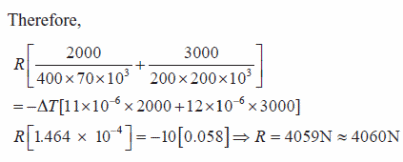
Q64. 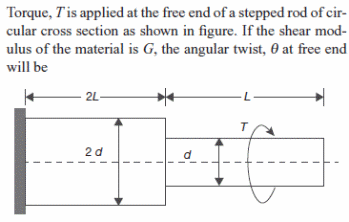
(a) 
(b) 
(c) 
(d) 
Ans. c
Sol.
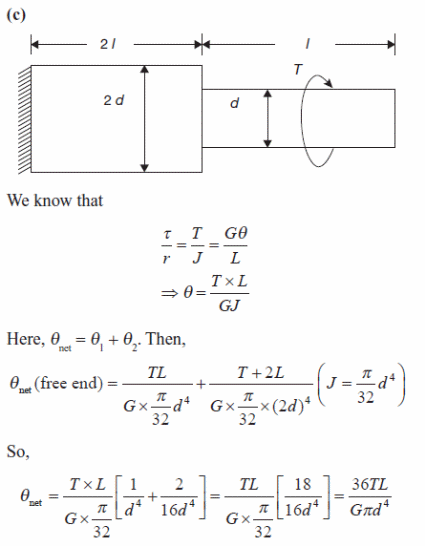
Q65. In most brittle materials, the ultimate strength in compression is larger than the ultimate strength in tension due to
(a) Necking in tension
(b) Presence of flaws and microscopic cracks or cavities
(c) Non-linearity of stress-strain diagram
(d) Severity of tensile stress as compared to compressive stress
Ans. b
Sol.
(b) In most brittle materials, the ultimate strength in compression is larger than the ultimate strength in tension due to presence of flaws and microscopic cracks or cavities.
Q66. 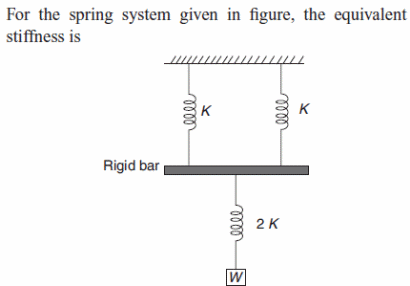
(a) 5K/2
(b) 2K/5
(c) K
(d) 3K
Ans. c
Sol.
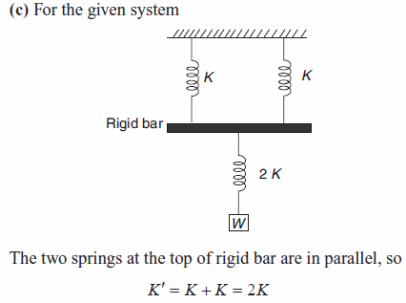
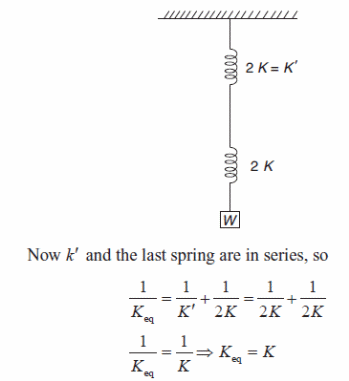
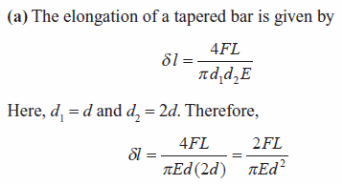
Q67. A round uniformly tapered bar of length L and Young’s modulus E has diameter of ‘d’ at one end and ‘2d’ at the other end. If the bar is pulled by an axial force F, the extension produced will be
(a) 
(b) 
(c) 
(d) 
Ans. a
Sol.
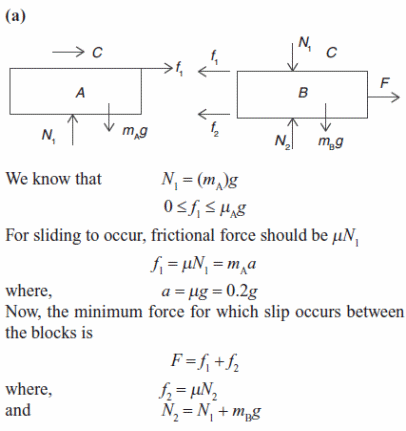
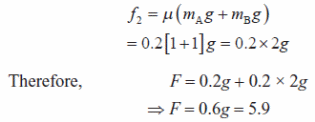
Q68. 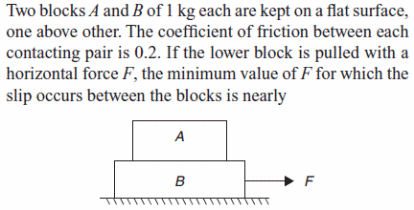
(a) 5.9 N
(b) 4.9 N
(c) 18.4 N
(d) 0
Ans. a
Sol.
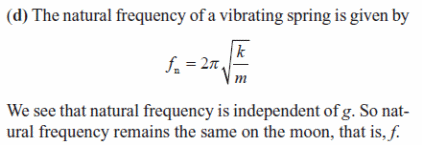
Q69. If the natural frequency of a spring mass system on earth is f, its natural frequency on moon where acceleration due to gravity is one-sixth of that on earth will be
(a) f/6
(b) 6f
(c) 
(d) f
Ans. d
Sol.
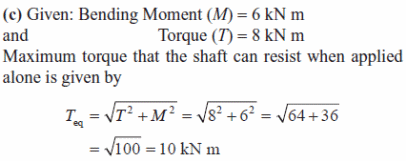
Q70. A solid shaft can resist a bending moment of 6 kN m and a torque of 8 kN m applied together. The maximum torque that the shaft can resist when applied alone is
(a) 7 kN m
(b) 48 kN m
(c) 10 kN m
(d) 14 kN m
Ans. c
Sol.
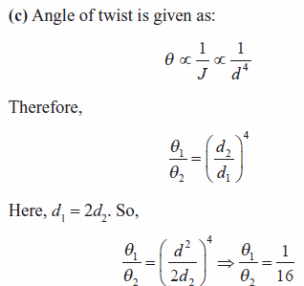
Q71. Two shafts of the same length and material are connected in series, if the ratio of their diameters is 2, then the ratio of their angles of twist will be
(a) 4
(b) 8
(c) 16
(d) 32
Ans. c
Sol.
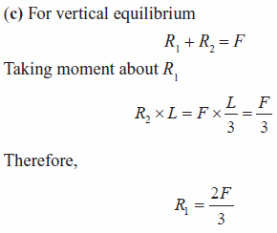
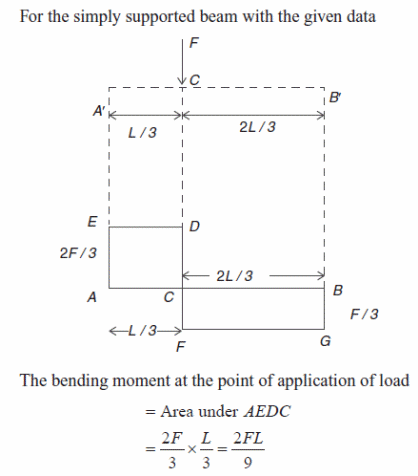
Q72. 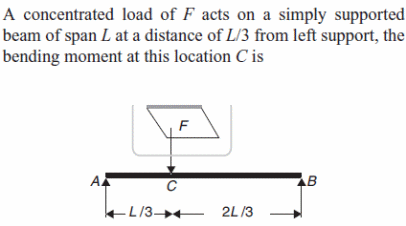
(a) 2FL/3
(b) 4FL/9
(c) 2FL/9
(d) 4FL/3
Ans. c
Sol.
Q73. A solid metal bar of uniform diameter D and length L is hung vertically. If r is density and E is the Young’s Modulus, then the total elongation due to self weight is
(a) 
(b) 
(c) 
(d) 
Ans. b
Sol.
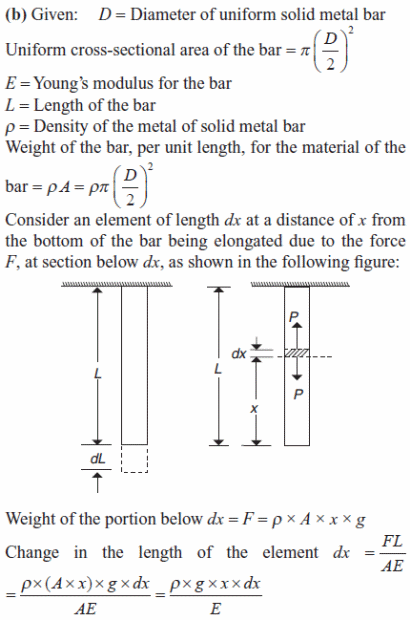
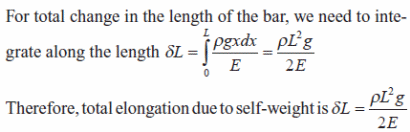
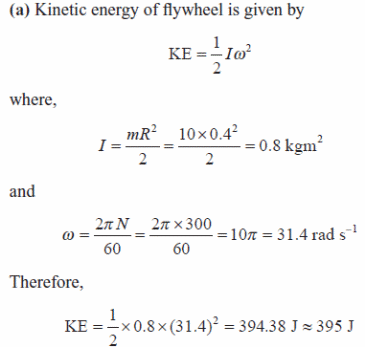
Q74. A circular solid disc of uniform thickness 20 mm, radius 400 mm and mass 10 kg, is used as a flywheel. If it rotates at 300 rpm, the kinetic energy of the flywheel, in Joules is
(a) 395
(b) 790
(c) 1580
(d) 3160
Ans. a
Sol.
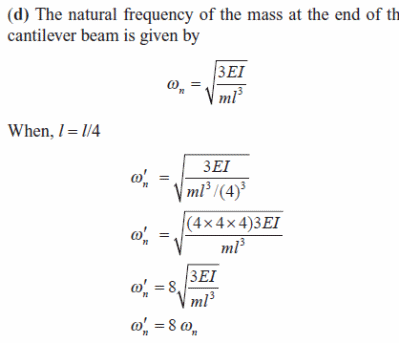
Q75. 
(a) 2
(b) 
(c) 4
(d) 8
Ans. d
Sol.
Q76. The relationship between the linear elastic properties Young’s Modulus (E), rigidity modulus (G) and Bulk modulus (K) is given by
(a) 
(b) 
(c) 
(d) 
Ans. d
Sol.
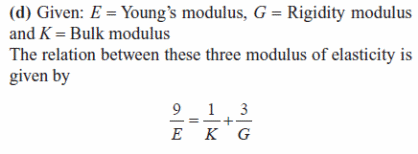
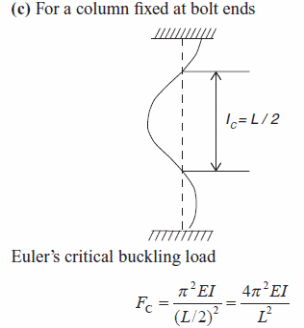
Q77. Euler’s critical buckling load for a column fixed at both ends is
(a) 
(b) 
(c) 
(d) 
Ans. c
Sol.
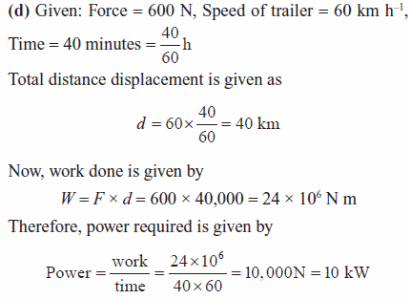
Q78. A truck hauls a trailer at 60 km/hour when exerting a steady pull of 600 N. If the work is done for 40 minutes, the power required is
(a) 6 kW
(b) 4 kW
(c) 2.4 kW
(d) 10 kW
Ans. d
Sol.
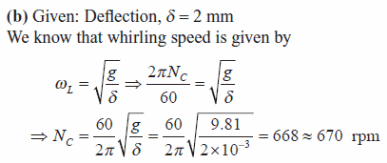
Q79. A perfectly balanced rotor shaft supported between short bearings at both ends shows a deflection of 2 mm at middle. Then the critical speed of the shaft in rpm will be nearly,
(a) 335
(b) 670
(c) 2010
(d) 1340
Ans. b
Sol.
Q80. 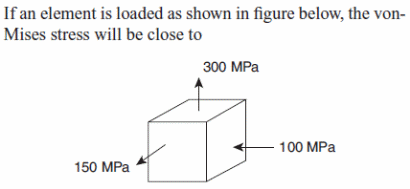
(a) 180 MPa
(b) 350 MPa
(c) 255 MPa
(d) 495 MPa
Ans. b
Sol.